
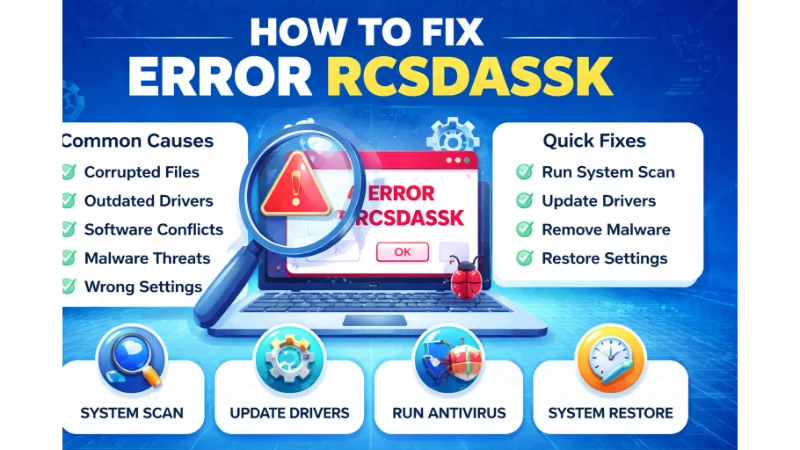
Dealing with system errors can be frustrating, especially when they appear without context. One such issue that has been confusing users is error rcsdassk. While it may look obscure at first glance, understanding its causes and solutions can save time and prevent system disruptions. This guide breaks everything down in simple terms. You will learn what this issue means, why it happens, and how to fix it effectively. Whether you are a beginner or an experienced user, this article will help you handle it with confidence.
What Is Error RCSDASSK?
Error rcsdassk is typically a system or application-related issue that appears when a process fails to execute correctly. It can be linked to corrupted files, misconfigured settings, or conflicts between software components.
This error may show up during:
- Software installation
- System startup
- File access operations
- Background processes
Although the exact cause can vary, the root problem usually involves communication failure between system components.
Common Causes of This Error
Understanding the cause is the first step toward fixing any issue. Below are the most common reasons behind this error:
1. Corrupted System Files
Damaged or missing system files can interrupt processes and trigger failures.
2. Software Conflicts
When two programs try to use the same resources, they may conflict and cause errors.
3. Outdated Drivers
Old or incompatible drivers often lead to system instability.
4. Malware or Security Threats
Malicious software can modify or delete critical files.
5. Incorrect System Configuration
Improper settings can disrupt normal system operations.
Signs You Are Experiencing This Issue
You may be dealing with error rcsdassk if you notice:
- Sudden application crashes
- Slow system performance
- Error pop-ups during startup
- Files failing to open or save
- System freezing intermittently
Recognizing these signs early can help prevent further complications.
How to Fix Error RCSDASSK
Fixing this issue does not always require advanced technical skills. Follow these practical steps:
Run a System Scan
Use built-in tools to scan and repair corrupted files.
Steps:
- Open Command Prompt as administrator
- Run system file checker
- Wait for the scan to complete
Update Drivers
Outdated drivers often cause compatibility issues.
- Visit your device manager
- Update all critical drivers
- Restart your system
Check for Software Conflicts
Uninstall recently installed applications that may be causing issues.
Perform Malware Scan
Run a full system scan using trusted antivirus software.
Restore System Settings
If the issue started recently, a system restore can help revert changes.
Comparison of Fix Methods
| Method | Difficulty Level | Time Required | Effectiveness |
|---|---|---|---|
| System Scan | Easy | Medium | High |
| Driver Update | Easy | Low | High |
| Malware Removal | Medium | Medium | High |
| System Restore | Medium | Low | Very High |
| Manual Troubleshooting | Advanced | High | Variable |
This table helps you choose the best solution based on your skill level and urgency.
Preventing Future Errors
Prevention is always better than repair. Here are simple ways to avoid similar issues:
Keep Software Updated
Regular updates fix bugs and improve compatibility.
Use Reliable Security Tools
Protect your system from malware and threats.
Avoid Unverified Downloads
Only install software from trusted sources.
Maintain System Health
Clean temporary files and monitor performance regularly.
Pros and Cons of Fix Approaches
Pros
- Improves overall system performance
- Reduces future errors
- Enhances security
- Extends system lifespan
Cons
- Some fixes require technical knowledge
- Time-consuming in complex cases
- Risk of incorrect changes if not careful
Advanced Troubleshooting Tips
If basic solutions do not work, consider these advanced steps:
Check Event Logs
System logs can provide detailed error information.
Reinstall Affected Software
A clean installation can remove corrupted components.
Use Safe Mode
Running the system in safe mode helps isolate issues.
Seek Professional Help
If the problem persists, consulting an expert may be necessary.
Why This Error Should Not Be Ignored
Ignoring error rcsdassk can lead to:
- Data loss
- System instability
- Reduced productivity
- Security vulnerabilities
Addressing it early ensures smoother system performance and avoids costly repairs.
Frequently Asked Questions (FAQs)
What causes error rcsdassk most often?
The most common causes are corrupted files, outdated drivers, and software conflicts.
Is this error dangerous?
It can become serious if ignored, especially if linked to malware or system corruption.
Can I fix it without technical skills?
Yes. Many solutions, such as updating drivers or running scans, are beginner-friendly.
How long does it take to fix?
Simple fixes can take minutes, while advanced troubleshooting may take longer.
Will resetting my system remove the error?
A full reset usually resolves the issue, but it should be used as a last resort.
Final Thoughts
Dealing with error rcsdassk does not have to be overwhelming. With the right approach, you can identify the cause and apply effective solutions quickly. Start with simple fixes like system scans and updates, then move to advanced methods if needed. Consistency is key. Regular maintenance and cautious usage habits can prevent this issue from returning. By staying proactive, you ensure a stable and efficient system for the long term. Visit my site for more details.